


The art of war keeps constant pace with the sciences, taking advantage of all discoveries and inventions, which may be found of use. Money without limit is spent to obtain the most efficient results in steam and electrical engineering, in chemistry, optics and metallurgy. The demands which modern war makes upon science are usually more imperative than those made for civil and commercial purposes. It may be readily understood, then, that, should a successful air-ship be constructed, it would find immediate occupation in the armies of the different nations who are rivaling each other in warlike preparations.
But is the success of the air-ship probable? Eminent engineers and scientists have for some time conceded that many of the important obstacles in the way of artificial flight have been removed, and it now seems probable that within a few years all problems connected with it will be solved, and a machine capable of sustained flight and entirely under control will be an actual fact.
 |
| Langley's Aerodrome |
The many failures of attempts at flight have made people skeptical in regard to success, and the ridicule commonly accorded experimenters has doubtless deterred many scientific investigators and withheld the capital necessary to make experiments, but within the last decade exhaustive experiments in regard to the sustaining and resisting power of the air have been made by several scientists, notably by Mr. Hiram Maxim and Mr. S. P. Langley. It is now known what weight the air will sustain, what power is necessary to support a definite weight, and other facts, which before were only guessed at. Experiments have also been made to determine the best material and the best form for the sustaining planes and the propellers.
To secure a satisfactory motor has long been regarded as the most difficult problem to be solved in obtaining flight, and until within a few years no motor had been constructed capable of sustaining, in addition to its own weight, that of the aeroplane or other means of support, the supply of fuel and the engineer, etc., but within that time, improvements in the quality of metals, and especially the advances made in steam engineering, have made such an achievement possible.
The power necessary to sustain a man in the air has been variously estimated by several experimenters. Mr. S. P. Langley, in his experiments with planes on a whirling table, found that one horse-power, rightly applied, would support over 200 pounds in the air at velocities over forty-five miles per hour. Mr. Maxim found, in a similar series of experiments, that with a plane moved at an angle of one on fourteen, one horse-power would support 133 pounds. Mr. 0. Chanute, in "The Progress of Flying Machines," states that as a general conclusion it may be said that, including the resistance of the machinery and framing, 100 pounds per horse-power is about the maximum that can be lifted, and he estimates that, in small aeroplanes capable of lifting one man, fifty pounds per horse-power is the greatest amount that can be allowed for the weight of the motor.
Motors have been constructed which will more than fulfill these demands. Mr. Langley has made a steam engine which, without the boiler, weighed only six pounds per horse-power. Mr. Hargrave, of Australia, has constructed a small engine which weighs only 10.7 pounds per horse-power. Mr. Maxim's engines of 300 horse-power weigh, with boiler and condensers complete, only eight pounds per horse-power, while the engines alone weigh only two pounds per horse-power. He considers it practicable to build an engine, boiler, condenser, etc., complete, which will weigh only five pounds per horse-power. Mr. Mosher, who built the steam yacht " Norwood," has stated that he can supply engines for experimental flying machines of less than ten pounds per horse-power.
The question of a suitable motor being disposed of, the most important difficulties remaining are successful alighting after flight and a satisfactory method of retaining equilibrium during flight. It is not probable that these will long remain obstacles in the path of the many investigators now interested in the work.
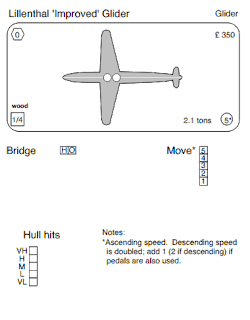
During the last twenty-fire years the French have been interested in the dirigible balloon, and have had partial success with it. The "La Prance," which attained the greatest success, was cigar-shaped, 165 feet long, and, with a nine-horse-power electric motor, attained a speed of fourteen miles per hour. A larger one is now projected that will make twenty-five miles per hour. While the dirigible balloon would be very useful, in the absence of anything better, the most experienced investigators claim that the aeroplane presents greater prospects of complete success. Many inventors are now experimenting with different forms of supporting and propelling machines. One of the most interesting is that of Mr. Otto Lilienthal, of Berlin, who, with a pair of bat-like wings twenty-six feet from tip to tip, has succeeded in flying 400 yards down the slope of a hill. In a recent model he uses a small motor, driven by compressed carbonic acid gas, to assist him in moving his Wings.
Mr. Phillips, of England, has constructed a flying machine weighing 330 pounds, which has a record of having flown 2,000 feet at the rate of forty miles per hour. While this machine was not absolutely free from the ground, it demonstrated its ability to raise more than its weight. The peculiar feature of it is the aeroplane, which resembles a Venetian blind eight feet high and twenty-two feet wide.
Mr. Maxim's aeroplane, which is one of the few air ships that have ever succeeded in getting beyond the model stage, and the only one of its size that has shown itself capable of rising from the ground, offers great promise. It has 5,400 square feet of aeroplane. Its extreme length is 125 feet; width, 104 feet; weight, 8,000 pounds, and its lifting power at a velocity of about fifty miles per hour is 10,000 pounds. Its record of actual free flight is over 500 feet. Mr. Maxim says that after having been so successful in constructing this machine, "it only remains to continue the experiments with a view of learning the art of manoeuvring it."
Since the perfecting of the air-ship in the near future seems so probable, it is certainly not out of place to speculate as to what would be its effect on warfare, since it would probably first be used for that purpose. The advantages to be gained by their use in war are so evident and so important that when once perfected they will form just as necessary a part of the defenses of a nation as is now furnished by a navy.
Air-ships may be used in war for observation of the enemy, for reconnaissance, for carrying dispatches, and for offensive attack.
 |
| Zeppelin's LZ-1 makes its first ascent. |
Balloons, usually captive, have often been used for observation of the enemy, and they now form part of the equipment of almost .all nations. An air-ship, completely under control, would be an ideal means of observation and reconnaissance. It could penetrate far into the enemy's country, and return promptly with intelligence. The most minute information of an enemy's numbers, disposition and movements could be obtained, which from its accuracy would be of incalculable importance to the commander of an army.
The general in command of an army could, from a position on an air-ship, make better disposition of his forces and, having better knowledge of how a battle was going, could meet emergencies more promptly.
For topographical work an air-ship would be a valuable auxiliary. By instantaneous photography of the underlying country, accurate maps could be made and multiplied for circulation.
For carrying messages the air-ship might be useful in the absence or interruption of electrical communication.
The most important field, however, for the operation of the air-ship would be its use in offensive operations. For this purpose it is eminently adapted, and will far surpass any weapon or means of offence that man has heretofore invented. An air-ship could, by rising beyond the range of the enemy's guns, or by moving rapidly in irregular or zigzag directions, prevent guns being trained and fired upon it, while its own guns would still be effective. The high angle of elevation required to fire at an air-ship would make the artillery of the present day useless, with the exception of mortars. The concentration of mortar fire might be attempted, but only a chance shot, while the air-ship was at a low altitude, could have any effect.
Air-ships will probably be armed with light rapid-fire guns for attack upon other air-ships, and with guns of low power, possibly pneumatic, for firing at objects beneath. In many cases guns could be dispensed with and projectiles of all kinds could simply be dropped. By coming up against the wind and making certain adjustments of the rudders and aeroplanes, the velocity could be diminished, possibly almost to a full stop, with-out the air-ship falling, and thus give the gunners an opportunity to do more accurate firing. A handful of bullets thrown from the height of a half-mile or so would be very destructive upon reaching the earth. Shell or shrapnel could be used with good effect. The greatest use of the air-ship, however, would be to drop torpedoes containing a high explosive. One torpedo exploded in the vicinity of a man-of-war would annihilate it. The ship would be entirely powerless to protect herself. No matter what her speed, she could not run away or conceal herself in any way, so that the destruction of an entire fleet would be a comparatively short matter. The bombardment of a city or a fort would be much more easily accomplished since the target would be larger and stationary.
An air-ship, then, hovering over the capital of a country would, unless a more powerful similar antagonist were brought against it, soon bring the government to favorable terms.
Land fortifications would be tenable only if provided with proper overhead protection for guns and men, and would be powerless against an air-ship. An army, when a hostile air-ship appeared, would be forced to adopt the most open kind of extended formation, since a closed mass would offer a good target for the aerial gunners.
The ability of an air-ship to hover over and threaten the headquarters of the commander of an army might have a vital effect upon the result of a battle.
The only method of attacking an air-ship that would offer a reasonable hope of success would be by other air-ships. The battle between them would be in some respects similar to one between naval vessels, with the additional features of much higher speed and of its not being confined to one plane. Each would endeavor to cripple the other. Their light construction would allow them to be easily damaged. The sustaining aeroplane destroyed, gravity would do the rest. Ramming would probably be impracticable. In a conflict between an aeroplane and a dirigible balloon, the latter would be at a decided disadvantage.
The possession of an air-ship, or the successful termination of a battle between air-ships, will thus quickly decide a war. We may look forward, then, to shorter wars in the future, and since the conflict of the air-ships will be the decisive factor of a battle, the relative importance of large armies and navies will be diminished. It would be absolutely necessary, therefore, that a nation engaging in war with another nation owning air-ships, should herself possess a sufficient number of them. To be without would be certain defeat, even though her antagonist were a small nation with an insignificant army and navy.
We may say, then, that the invention of a successful air-ship will cause an entire revolution in the art of war more stupendous than that caused by any invention since that of gunpowder, and even surpassing that, since it only increased the distance between the lines of the combatants, while the principles of attack and defense, strategy and supply, remained unchanged, or were only slowly modified. A flying machine, however, will nullify strategy, make vital changes in the principles of attack and defense, diminish the importance of navies and sea-coast fortifications, and by bringing the theatre of operations to the doors of palaces and legislatures, render speedy settlement of national grievances imperative.
by Lt. John K. Cree, U.S.A., ©1896; This article originally appeared in the January 1, 1896, issue of the North American Review.



 Posts
Posts

